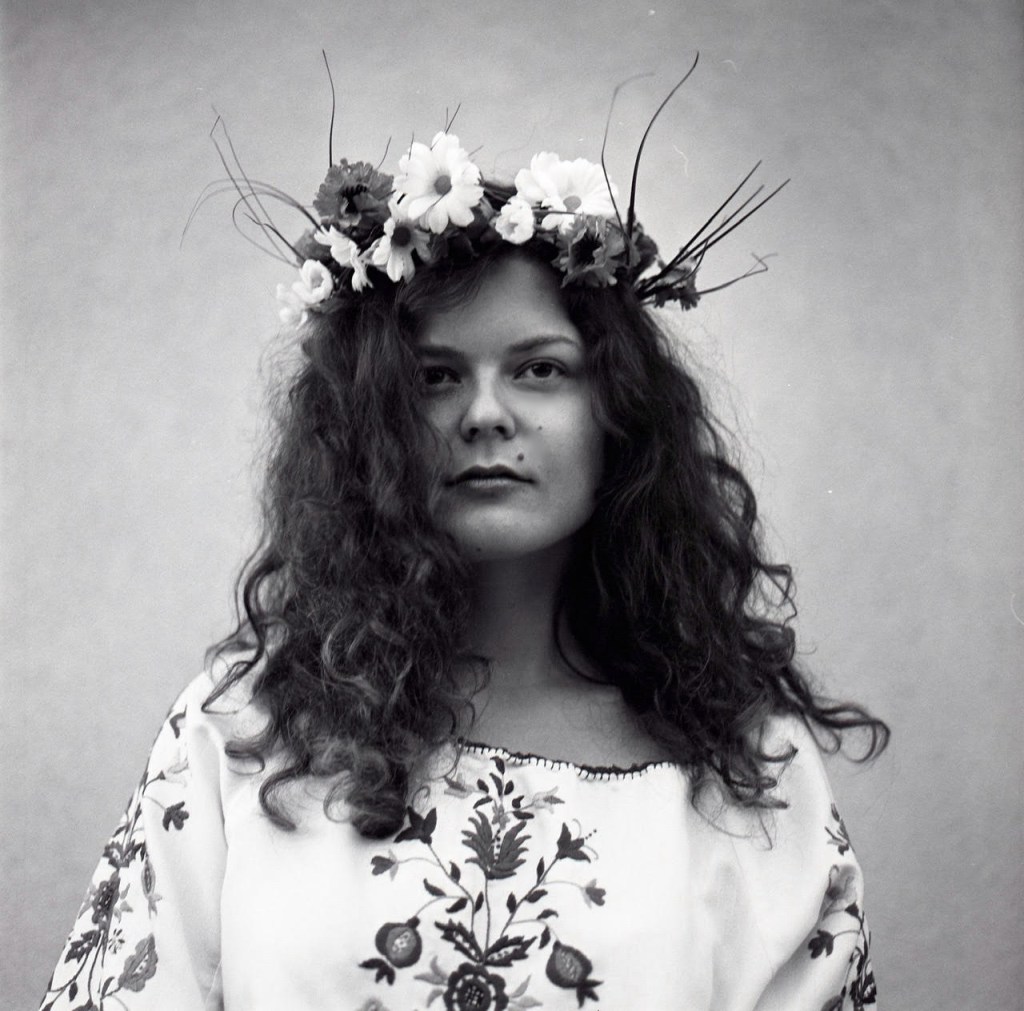
Over the canals of Birmingham city centre an ancient whisper hums over the water. It could be something mystical, but it might just as easily be Karolina Wegrzyn, the Polish singer and musician bringing music from her native Carpathians and beyond to the UK. A skilled storyteller, Karolina shares folk songs from her native Poland, and is no doubt enjoying the small but energetic revival in folk music. You could describe Karolina as a musical anthropologist, collecting and preserving songs and music from across the continent and generations. We spoke to Karolina about her early influences, storytelling through music, and music as a powerful tool for community.
Lucky enough to have been surrounded by music from an early age, Karolia says her family was firmly artistic “despite not having opportunities for education in those areas,” living in the incredibly isolated countryside. For almost 50 years her Grandmother organised a folk dance group in their village nestled in Przeworskie in the Subcarpathian voivodeship (Podkarpacie), south-eastern Poland. It was the driven and unwavering creative spirit her Grandmother embodied that made her such a key influence. Karolina remembers, “we always sang and danced together.”
It was in her Grandmother’s dance group that her parents met; her father a budding musician with dreams of being a footballer, despite the stark reality of life in communist Poland at that time. As the old Eastern Bloc was slowly collapsing, free music schools started to open across the Country. In one simple act he changed the trajectory of Karolina’s life. “He signed me up for piano lessons. And that’s how it all started” Karolina continues.

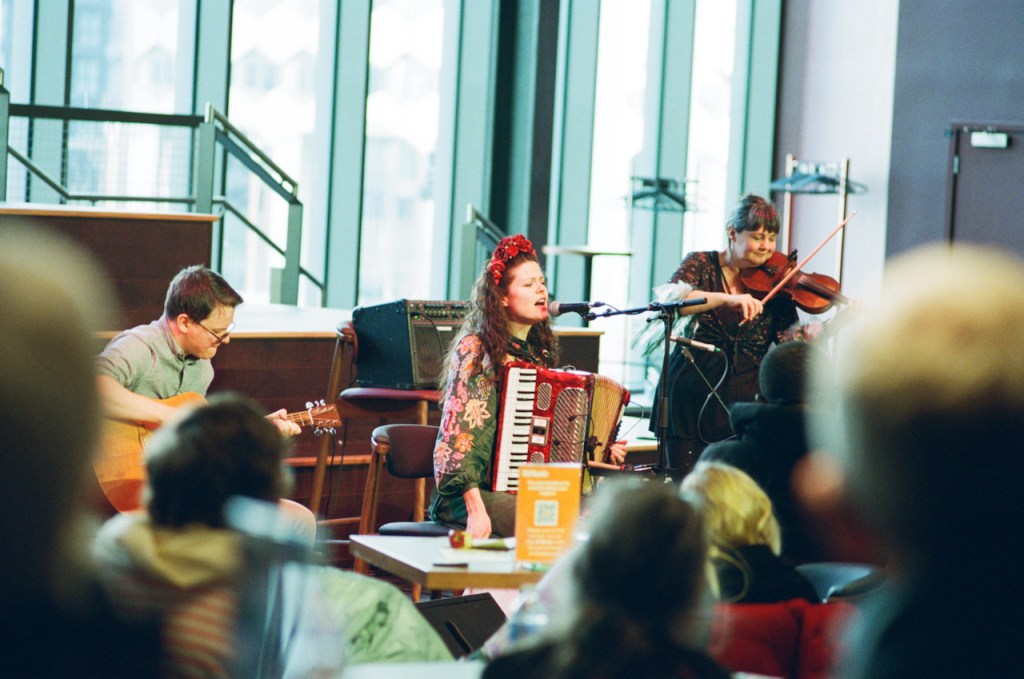
Folk music has had a sort of resurgence in recent years, with a new found audience for the once niche genre, even seen seeping into the charts with acts like The Last Dinner Party and Maggie Rogers leaning on the genre for inspiration. In the Midlands this trend is mirrored as a new-found appreciation for folk music is emerging, somewhat influenced by the need to find community and belonging in an increasingly globalised British society. Karolina explains, “at a university in the UK I felt lost, without a community’s spirit, with no sense of belonging.” It was in reigniting her interest in music that she found her work “has a purpose again,” adding “I am part of something very important … Many Eastern-European listeners come up to me after my shows to say how wonderful it was to feel connected to their roots – it gives me the happiest moments in my life.”
Each folk song is a tool, instrumental to everyday life in acts such as lullabies, wedding or funeral songs; “Music was not a ‘stage performance” Karolina says, adding “A whole community would participate, which strengthens connections … kept people’s identities alive in hard time.” This sentiment is continued through Karolina’s own performances; it’s more than a nostalgia for a simpler past that fuels interest in the genre.
In recent years Karolina has been part of larger community events highlighting the need for her work. For the past couple of years she has been on the lineup for Migration Matters festival in Sheffield, highlighting the incredible and diverse communities that exist throughout the UK.
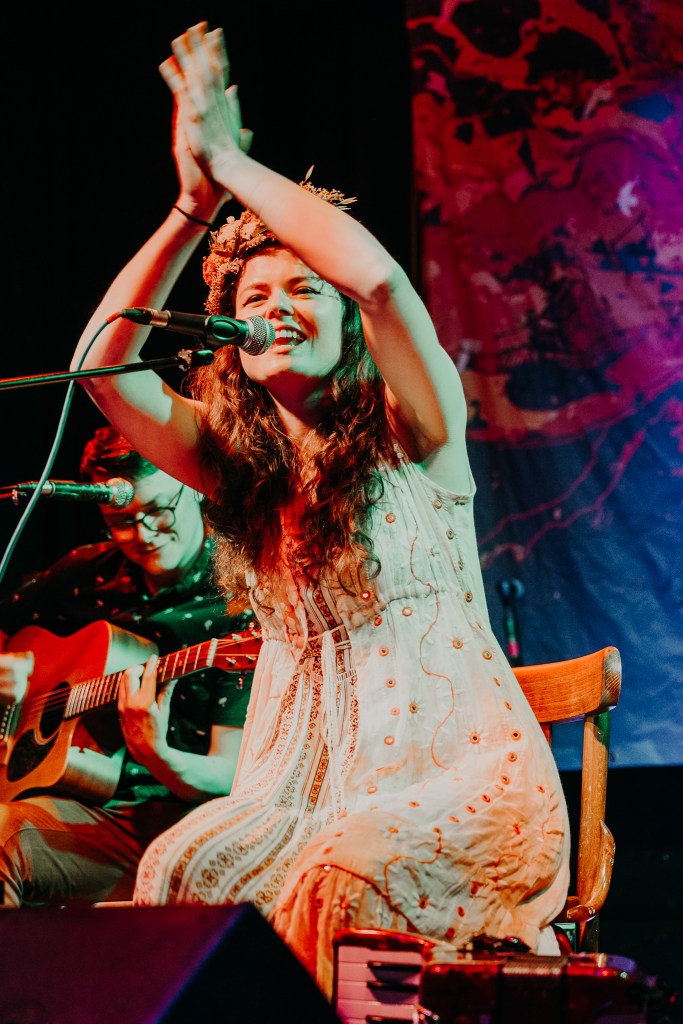
Identifying the need for preserving music from her native Poland, Karolina also has a huge amount of solidarity for other Central and Eastern European intangible traditions at risk of being forgotten. Her recent album includes songs from Poland, Ukraine, and North Macedonia. What most would consider a challenge, Karolina finds pleasure in singing in other languages. “I recently joined a Georgian choir in Birmingham – Ensembe Bednieri… It gives me so much joy singing harmonies with others.” “Being close together keeps everyone in tune but also gives you lots of endorphins” she insists.
Cross-cultural learning is strong, with Karolina also dabbling in Bulgarian and Romanian music. Romanian being a non slavic language was particularly different to the other languages she has performed in, but after a visit with a Romanian friend over breakfast she mastered the pronunciation. She adds, “It was such a joyful and meaningful way to spend time with a friend.”
Central and Eastern Europe is incredibly diverse in it’s languages, traditions, and customs. But in folk music it is easy to find a few things that link the wider region together, universal experiences that can be found in almost any nations folk songs. Amongst the folly of timeless love stories, is comedic jests. “There is a lot of humour and cheekiness.” But some tales also have a more serious tone, agony not yet overcome in our modern age. “There are stories of domestic violence, which were unfortunately very common and widely tolerated,” Karolina tells us. Polish women have been battling for their rights, overshadowed by the Catholic church’s persistent influence on everyday life and government. In October 2020-2021 women protested (Stajk Kobiet) in reaction to a ruling of the Constitutional Tribunal, making almost all cases of abortion illegal. “I feel that in Eastern Europe we still have a long way to go to fully respect women.”
Karolina has a great care for the people around her, and her music is just one of the ways she actions this. In making her latest album she wanted “listeners to be more open to other cultures, more compassionate to immigrants and refugees especially in such difficult times across the world.” Poland national identity has been in danger of erasure in living history, its people know the dangers of censorship and the reality of displacement. “When during WWII many Polish people found refuge in the Middle East and Africa – the then government of Iran created educational centres for Polish communities, and many fellow citizens found home in Africa.” In ending on this reflective note, we are reminded of what it really means to be able to celebrate your roots freely, and without prejudice. Through music Karolina has found a way to vocalise this sentiment, bring people together regardless of borders or their culture, and ultimately celebrate our individual and collective identities.
Karolina’s debut album ‘Oy Vesna Krasna’ can be found on all good streaming platforms, and for sale here
Tour dates
Easter Event
12th April, 2025
—
Caldmore Community Gardens Walsall
Coventry Cathedral Spring Festival
26th April, 2025
—
Coventry
Georgian Choir ‘Ensemble Bednieri’ – May Day
4th May, 2025
—
Cotteridge Park, Birmingham
Songlines Encounters Festival
17th May, 2025
—
Kings Place London
Hellens Garden Festival
17th June, 2025
— Herefordshire
CUD Festival
28th June, 2025
—
Timsbury, Bath
Georgian Choir ‘Ensemble Bednieri’ – CoComad Festival
5th July, 2025
—
Cotteridge Park, Birmingham
Celebrating Sanctuary lunchtime concerts
31st July, 2025
—
Birmingham Symphony Hall, Jennifer Blackwell Space
 ceenotts.co.uk
Leave a comment